
HOLY MATRIMONY
Holy Matrimony (2025) is a Nollywood drama starring Frederick Leonard, Onyi Alex, and Nini Mbonu. The movie explores marriage challenges, love, betrayal, and trust issues. When secrets threaten a relationship, the couple must face emotional struggles to save their union. Perfect for fans of Nigerian romantic and family dramas. Frederick Leonard, Onyi Alex, and Nini Mbonu.
3/30/20263 min read
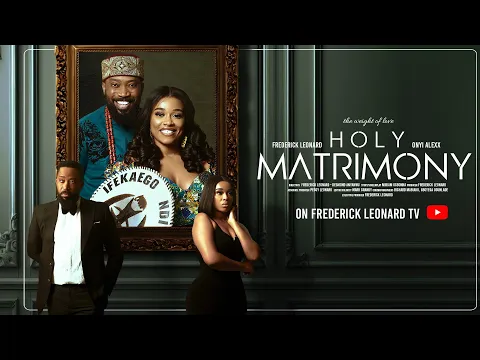
"One and a Half Minute Man”: Inside a Marriage That Exploded From Love to Chaos
What was once a passionate love story slowly transforms into a psychological battlefield where intimacy, ego, and frustration collide.
Sharon and her husband Emeka are no longer a couple in harmony—they are two people trapped in a cycle of emotional warfare. From the very first moments, their relationship is defined by provocation. Sharon humiliates Emeka over his sexual performance, even going as far as setting a timer to mock how long he lasts, branding him a “one-and-a-half-minute man.”
But behind the sarcasm lies deeper tension. Emeka is drowning in work pressure and mental exhaustion, while Sharon feels ignored, undesired, and emotionally abandoned. What should be a safe home has become a space of constant accusation and resentment.
Their arguments escalate quickly—no longer about small misunderstandings, but about identity, masculinity, and unmet emotional needs. Sharon demands more intimacy, attention, and a child, while Emeka insists he is mentally and physically drained from carrying the financial burden of the household.
The breaking point arrives when Emeka, overwhelmed, calls his mother in desperation, confessing that he can no longer find peace in his own home. Sharon sees this as betrayal, intensifying her anger and suspicion.
From that moment, trust begins to collapse completely. Sharon becomes paranoid, convinced her husband is cheating, while Emeka starts emotionally detaching from the marriage. Outside voices enter the chaos—friends encouraging him to seek happiness elsewhere, and a hotel worker who subtly offers him emotional comfort.
For a brief moment, there is honesty. Both admit the truth: they are unhappy, exhausted, and emotionally disconnected. But instead of healing, their communication turns into another cycle of blame.
Sharon insists Emeka is neglecting her needs. Emeka insists she never listens. Every conversation becomes a trigger. Every apology turns into another fight.
Even intimacy becomes transactional—something demanded, resisted, and weaponized rather than shared.
At the core of their downfall lies a simple but devastating truth: they stopped understanding each other long before they stopped loving each other.
The story reaches a chilling emotional peak as Emeka describes the marriage as toxic, draining, and suffocating. Sharon, on the other hand, believes she is fighting for attention, love, and security.
Two perspectives. One collapsing relationship.
And as temptation, resentment, and emotional exhaustion grow stronger, the question becomes unavoidable:
When love turns into pressure instead of peace… can it still survive?
Or is this the moment where everything finally breaks?
Sharon arrives late after freshening up. Tension continues between her and her husband, with her mother insisting she should return to her husband and stop the constant fighting.
Her husband argues that Sharon is opinionated, difficult to communicate with, and that their relationship keeps escalating into arguments. Sharon responds that he is dismissive and that they can’t see eye to eye. The conflict grows, with both blaming each other.
The issue of children comes up. The husband says he never refused children but wanted them to enjoy early marriage first. Sharon insists their intimacy problems and lack of understanding are major issues.
The argument escalates when Sharon confronts him about a neighbor (Cynthia), accusing him of cheating. The husband denies wrongdoing, but Sharon is convinced he is unfaithful. The confrontation becomes heated, and insults are exchanged.
Eventually, the husband admits emotional frustration and says he feels trapped in the marriage. He tells Sharon he wants a divorce, saying they are not compatible anymore.
Sharon is devastated and leaves, while both insult each other in anger and pain.
Later, emotional reflection follows. The husband begins to regret the situation, and Sharon is seen breaking down emotionally at her mother’s place.
Meanwhile, Cynthia (the neighbor) confesses her feelings to the husband, saying she loves him and wants a future with him. However, he rejects her, saying he is still in love with his wife and cannot be in a relationship with her.
Cynthia insists, but he explains that whatever happened between them was during a vulnerable time and does not change his commitment to his wife. She is heartbroken.
Sharon’s mother advises her to return to her husband, saying marriage requires patience and understanding. Sharon eventually decides to reconcile.
In the final emotional reconciliation:
The husband apologizes deeply.
He says he wants to change and save the marriage.
Sharon also agrees to try again.
They both express love and commitment.
They decide to rebuild their relationship together.
The story ends with them reunited, celebrating their love and promising to work on their marriage.
In the end, love wins over pride. They choose forgiveness, reconciliation, and a fresh start, committing to rebuild their marriage with more patience, honesty, and understanding—determined not to repeat the same mistakes again.
Their relationship survives not because it was perfect, but because they both chose to fight for it despite everything.
Do you like this personnaly ? please drop your point
Contact
Have questions, ideas, or want to collaborate?
© 2026. All rights reserved.